In our interview with Jason Stevan Hill of Choice of Games, Benjamin Rosenbaum and I asked what kinds of narrative games were most popular (since we figure some of our podcast listeners might want to pitch to them — heck, I might want to pitch to them.) And Jason said power fantasies were by far the most popular.
I’m still thinking about that — about who finds power fantasies appealing, and why. It’s making me wonder if Choice of Games knows the demographics of their players — do narrative games like theirs tilt male in their players, for example? Gaming culture is still pretty overwhelmingly male overall, I think, and there are some real political concerns with how conversations are framed in some of those spaces (especially video gaming spaces).
(Important note: CoG tries really hard to be equitable along gender lines — all of their games can be played as male or female (and at least some, as non-binary), they include trans protagonists, and they also require offering non-straight orientations (if sexuality is relevant to your character / story. I’m not meaning to call out CoG here; our conversation just set off a train of thought.)
I certainly grew up with a lot of fantasy and science fiction that had a Chosen One narrative, where someone who is initially presented as weak (and often bullied) discovers that they have unknown powers, and with a little training, end up king of the kingdom by the end of the book.
I’m not a fan of the Chosen One narrative. And even the version where you don’t have special secret powers, but you still end up king of the kingdom at the end (due to hard work, luck, rising to the challenge) — I loved those as a kid, but these days, I often find them unsatisfying.
The singular hero tale — there are times when a single hero does save the day. But most of the time, when things improve, it’s the work of many, many people acting together — or maybe not entirely together, but driving, shoving, coaxing, in roughly the same direction, slowly adjusting the course of the massive cultural ship.
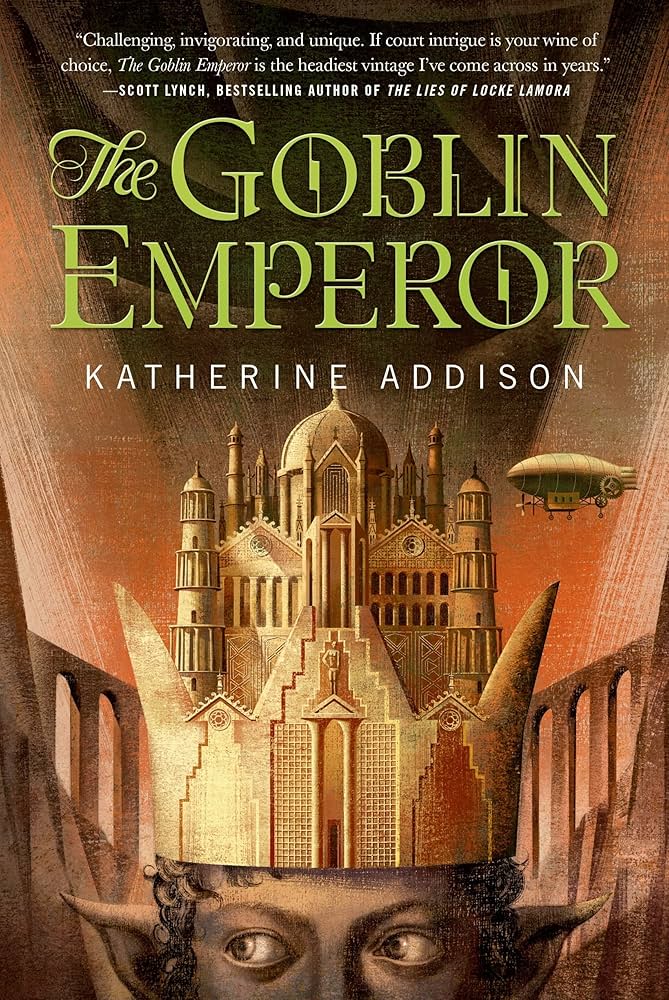
I just re-read The Goblin Emperor yesterday (by Sarah Monette, writing as Katherine Addison). And in some ways, yes, it’s a power fantasy — the poor, abused kid ends up emperor, and able to do massive good. But most of the book is a friendship and comfort fantasy, I think, not a power fantasy. At the start of the book, Maia is isolated and alone, and initially, absolutely overwhelmed by what’s being asked of him, and by feeling like there’s no one he can trust or be friends with.
And then, he’s a good, decent person, and by dint of pretty much that alone (plus a little everyday courage), he finds friends. He doesn’t even win them, so much — it’s more that he discovers that there are lots of people who are just nice, and perfectly happy to be his friend, now that he’s out of the toxic environment he grew up in.
Martha Wells’s Murderbot follows a similar track — yes, Murderbot has some power, but the power isn’t really the point. It’s that they keep putting themself in danger to help other people, and other people treat them like a person, not an object / machine / slave.
I’m sure there’s a name for this kind of narrative. It’s related to the hurt-comfort trope, but I think of that as a one-to-one relationship, rather than ‘discovering the whole world is not out to destroy you, and there are actually good, decent people all around, and also, you are likable, even lovable, no matter what your abusers told you before.’ There must be a less-wordy way of saying that.
It’s not a power fantasy, though. A kindness fantasy? A justice fantasy?
Something like that.